Watts Before Horsepower: The Electrical Infrastructure Problem Quietly Robbing Your Front-Engine Dragster of Consistent Times
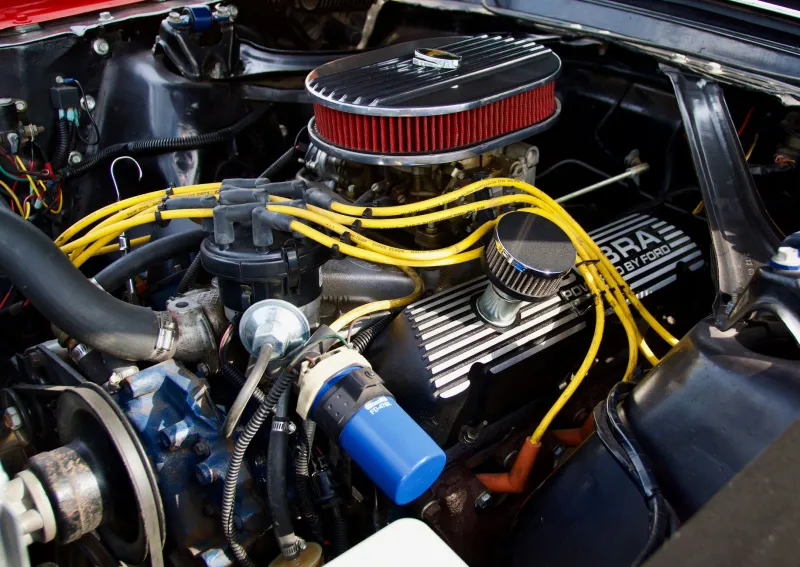
Here's a scenario that probably sounds familiar. You've got a solid front-engine dragster. The engine is dialed in, the clutch feels right, and your 60-foot numbers have been improving steadily. Then one hot Saturday afternoon at a regional event, your ETs start drifting. Not a lot — maybe three or four hundredths — but enough to knock you out in the semis. You check the tune, swap the plugs, re-inspect the clutch pack. Everything looks fine. You go home scratching your head.
What you probably didn't check was your fuel pump voltage under load.
This is the conversation happening at the sharp end of competitive front-engine dragster racing right now, and it's long overdue. The electrical system — specifically the relationship between your alternator output, your wiring gauge, your battery state, and your fuel pump's actual operating voltage — is one of the most underexamined performance variables in the sport. And it's costing teams real, measurable time.
The Demand Spike Nobody Plans For
Electric fuel pumps are not passive devices. High-performance in-tank or inline pumps designed for drag racing applications can pull anywhere from 10 to over 20 amps depending on the unit and the fuel pressure demand. That's before you account for the ignition system, cooling fans, data logging equipment, and anything else running off the same circuit.
The problem isn't idle consumption — it's what happens during a hard launch. The moment you stage and the tree drops, everything on your electrical system spikes simultaneously. The ignition is firing at maximum load. Any electronic components tied into the system are pulling current. And your fuel pump, which needs consistent voltage to maintain consistent pressure, is competing for every available amp.
If your alternator is undersized for that total demand — which is common on builds that have added components over time without revisiting the charging system — your battery starts making up the difference. That's fine for a few seconds. But battery voltage under discharge doesn't stay flat. It sags. And when pump voltage sags, fuel pressure follows. When fuel pressure drops mid-run, your air-fuel ratio goes lean. And lean means slower.
The Wiring Problem Is Worse Than You Think
Even if your alternator is technically adequate, the wiring routing it to your fuel pump may not be. This is where a lot of builds that look clean on paper fall apart in practice.
Consider a typical front-engine dragster build where the fuel pump is mounted at the rear and the battery sits up front near the driver. You've got significant wire length between those two points. Every foot of undersized wire adds resistance. Resistance under load means voltage drop. A pump rated to perform at 13.5 volts that's actually seeing 11.8 volts at the connector is running in a compromised state — and it's doing so at the exact moment you need it most.
A lot of builders use 12-gauge wire for fuel pump circuits because that's what they've always used, or because it's what came on the donor vehicle, or because it looks about right. On a mild street car, that's probably fine. On a race application with a high-draw pump, long wire runs, and consistent full-throttle demand, it's a liability. Moving to 10-gauge or even 8-gauge wire on dedicated fuel pump circuits — with a direct, fused run from the battery — is one of the cheapest performance upgrades available, and most teams never do it.
Real Builds, Real Gains
This isn't theoretical. Talk to enough competitive front-engine dragster teams and you'll find a pattern: builders who addressed electrical infrastructure before major engine upgrades often saw more consistent ET improvements than they expected.
One Midwest-based team running a small-block Chevy in a nostalgia dragster class spent two seasons chasing inconsistent 60-foot numbers. They'd done everything — different tire compounds, adjusted launch RPM, experimented with converter stall. The variance persisted. On a hunch, a crew member brought in a voltage logger and wired it directly at the fuel pump connector during a test session. What they found was a 1.4-volt drop between idle and full-throttle launch, every single pass. They upgraded the alternator from a 65-amp OEM-style unit to a high-output 130-amp racing alternator, rewired the fuel pump circuit with dedicated 8-gauge wire and a relay, and added a battery tender to ensure full charge at the start of every session. Their 60-foot variance dropped from roughly 0.04 seconds to under 0.01 over the next eight passes. They hadn't touched the engine.
Another builder in the Southeast running a blown alcohol setup had been chasing lean spikes on the data logger that nobody could explain. The carburetor was jetted correctly. The fuel system components were all properly rated. What they eventually discovered was a failing alternator diode that was causing irregular charging output — enough to keep the battery topped off at rest but insufficient to maintain stable voltage during a hard run. Swapping to a rebuilt, properly tested alternator eliminated the lean condition entirely.
What a Proper Electrical Audit Actually Looks Like
If you've never done a dedicated electrical audit on your front-engine dragster, here's where to start.
First, measure actual voltage at your fuel pump connector under load — not at the battery, not at the fuse block, at the pump itself. Do this during a warm, fully loaded run if possible. Anything below 13 volts during operation is worth investigating. Below 12.5 is a problem.
Second, check your alternator's actual output under load. Many auto parts stores will test alternators off the car, but that tells you almost nothing about real-world performance under racing conditions. A proper load test on the car, with everything running, gives you the real number.
Third, trace your fuel pump wiring from source to pump. Note the wire gauge, the length of the run, the number of connections, and whether the circuit runs through a relay or directly through a switch. Every connection is a potential resistance point. Every undersized segment is a voltage drop waiting to happen.
Finally, consider your battery. Race batteries optimized for weight savings often sacrifice reserve capacity. If you're running a lightweight AGM or lithium battery without a properly sized alternator to back it up, you're relying on a shallow reserve for consistency. That works fine until conditions stress the system — hot ambient temps, a long staging lane wait, multiple close-together rounds.
The Unsexy Upgrade That Actually Moves the Needle
There's a reason electrical infrastructure doesn't get talked about the same way camshafts and converters do. It's not glamorous. You can't dyno a wiring harness. Nobody's going to ask about your alternator at the burnout box.
But here's the reality: a front-engine dragster is a system, and every subsystem affects the others. The engine can only perform to the capability of its fuel delivery. Fuel delivery can only perform to the capability of its electrical supply. If that supply is inconsistent — and for a surprising number of competitive builds, it is — everything downstream inherits that inconsistency.
The teams consistently running tight ETs in competitive classes have already figured this out. They treat electrical capacity as a performance specification, not an afterthought. They size their alternators for total system demand with headroom to spare. They wire fuel pump circuits like they matter, because they do.
If you're looking for tenths and you've already maxed out the obvious stuff, plug in a voltage logger before you pull the intake manifold. You might be surprised what you find.