No Two Nights Are the Same: Why Your Front-Engine Dragster's Launch Tune Lives and Dies by the Conditions
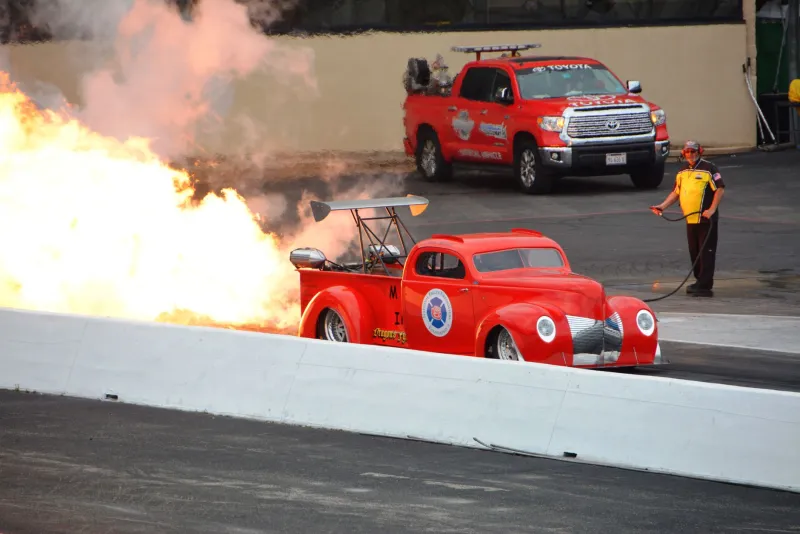
There's a certain kind of racer who shows up to the strip with a laminated setup sheet, a stubborn streak, and absolutely zero interest in hearing that conditions have changed since last week. You've seen this guy. Maybe you've been this guy. He runs the same clutch engagement settings, the same converter stall speed, the same everything — and then spends the drive home wondering why his 60-foot times looked like a different car showed up.
The truth about front-engine dragster launches is uncomfortable for anyone who wants a tidy, repeatable formula: the perfect setup doesn't exist as a fixed number. It exists as a response — a living adjustment to everything the track, the sky, and even your fuel supplier decided to throw at you that particular evening.
The Variables Nobody Puts on a Setup Sheet
Let's start with the obvious ones. Temperature and humidity are the two atmospheric conditions most racers at least acknowledge. When ambient temps drop, air density increases, and your engine breathes better — which means it's also capable of overwhelming a clutch tune that felt just right when it was 88 degrees at an August night race. That same setup that launched clean in the heat can suddenly spin the tires off the line when the fall air rolls in cold and thick.
Humidity compounds this. A dry, 65-degree evening and a muggy, 65-degree evening are not the same animal. Moisture in the air affects combustion efficiency, and it also changes how the track surface grips. A track that prep'd beautifully at 7 PM can turn slick by 10 PM as dew starts settling, even if the temperature barely moved.
Then there's track surface itself — the variable a lot of racers underestimate until it bites them hard. The prep compound lays down differently depending on how many cars ran before you, what class they were, and how the track crew manages the surface between rounds. A fresh coat of VHT near the Christmas tree means nothing if the mid-track has gone cold and greasy. Your front-engine dragster's clutch engagement timing that worked in round one might be spinning the tires in round three on the exact same track.
What the Data Actually Shows
Talk to enough experienced front-engine dragster teams and you'll start hearing the same story told different ways. One driver running a naturally aspirated big-block on a 10.5-inch tire described back-to-back test passes on a late October evening where his 60-foot times swung by nearly two tenths — same car, same driver, same fuel, different round. The only meaningful change was that the track had cooled between rounds and the clutch engagement point that hooked perfectly the first time was now coming in too aggressive.
Another team running a blown alcohol setup documented fuel batch variations from their supplier creating measurable differences in how the converter responded off the line. Not massive swings, but when you're chasing hundredths, a slightly leaner or richer batch from the drum you grabbed versus the one from two weeks ago is enough to push your stall speed characteristics out of the sweet spot.
This isn't theory. These are real conversations happening in real pit areas at tracks across the country every weekend. The teams logging this data and acting on it are separating themselves from the ones running the same card every time out.
Clutch Engagement and Converter Stall: Where the Adjustments Actually Happen
For front-engine dragster builders, the clutch and torque converter are the primary tools for dialing in launch behavior. Understanding how to use them as tuning levers — rather than set-it-and-forget-it hardware — is what separates a competitive setup from a consistent disappointment.
Clutch engagement timing affects how aggressively the car transfers power to the rear wheels at the hit. Too early and you're loading the driveline before the tires can respond; too late and you're leaving power on the table and losing ground to cars that hooked cleaner. When track temps drop or surface conditions change, the slip-to-grip transition shifts. What engaged cleanly at one setting might need a small adjustment in engagement point to match the new surface behavior.
Converter stall speed interacts with this directly. A higher stall helps the engine build RPM before the car starts moving, which works well when you need the car to ease into the launch on a slick surface. But on a well-prepped track with good bite, a stall that's too high can leave you spinning at the hit because the car launches harder than the tune anticipated. The relationship between stall speed and clutch engagement isn't linear — small changes to one can amplify or offset the other depending on conditions.
Adaptive Thinking as a Competitive Tool
The teams winning consistently aren't the ones with the most expensive parts. They're the ones who treat every run as a data point and build a mental — or literal — log of how their car behaves across different conditions.
Practical habits that help: track the weather data at the time of each pass, not just the general forecast. Log track surface notes between rounds. If you're running multiple events per season, compare your 60-foot times against ambient conditions over time — patterns will emerge. Your car is telling you something on every pass. The question is whether you're listening.
Keeping a physical or digital tuning log doesn't have to be complicated. Ambient temp, humidity, track prep condition, clutch setting, stall speed, and your 60-foot result. That's five data points per pass. After a full season, you'll have a real-world map of how your specific car responds to changing conditions — and that map is worth more than any generic setup guide.
Stop Chasing the Perfect Number, Start Chasing the Right Response
The dragster community loves the idea of dialing in a setup and locking it in. It feels like mastery. And there's a version of that which is real — you absolutely should have a baseline tune that represents your best understanding of where the car likes to be. But that baseline is a starting point, not a destination.
The racers who consistently run strong 60-foot times across different events, different seasons, and different tracks have internalized something that the laminated-setup-sheet crowd hasn't: the strip changes, and the car has to change with it. Ambient conditions will shift on you mid-event. Track prep will evolve round by round. Fuel batches will vary. These aren't excuses — they're the actual game.
Front-engine dragsters reward mechanical precision, but they also reward the people turning the wrenches and making the calls. Build the car right, sure. But show up ready to think, ready to adjust, and ready to admit that what worked last weekend might need a tweak tonight. That adaptive mindset is what puts you in the winner's circle when conditions get weird — and at the strip, conditions always get weird eventually.