Dead-End Blueprints: Why Copying Your Racing Hero's Build Will Cost You More Than It Teaches You
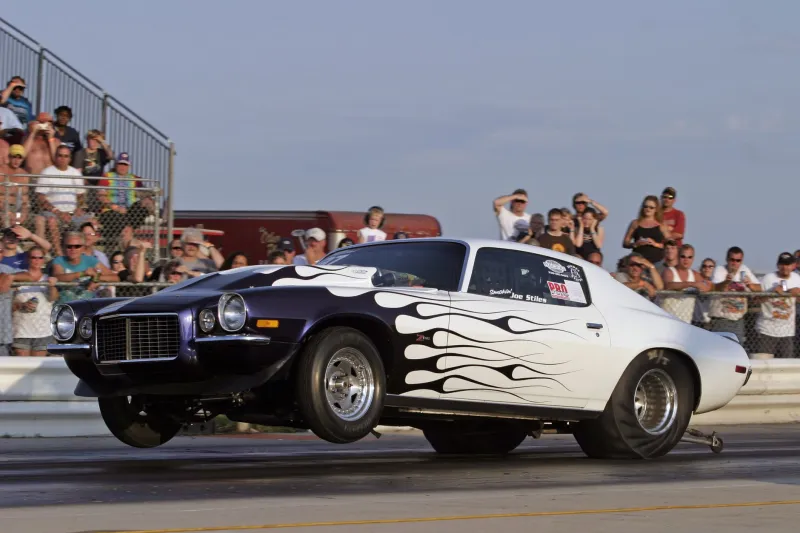
There's a certain kind of drag racing obsession that hits builders hard — the kind where you spend three weeks down a rabbit hole of old National Dragster issues and grainy Super 8 footage, convinced you've cracked the code. Your hero ran a 6.40 at Pomona in 1971 on a setup that looked almost primitive by today's standards. You've got the parts list, or at least most of it. You've got the chassis dimensions scribbled on a notepad. You're ready to build the thing and show up to the strip and turn heads.
Then reality sets in.
The nostalgia trap is real, and it costs front-engine dragster builders real money, real time, and sometimes real heartbreak. Understanding why those legendary setups don't just drop into a modern build context is one of the most valuable lessons you can absorb before you ever cut a tube or order a single component.
The Myth of the Complete Parts List
Here's the first hard truth: you never actually have the full picture. What got published in the magazines was what the team wanted you to know. The tuner's notebook — the one with the real jetting numbers, the actual ignition timing curves, the weight distribution tweaks they ran the week before that record pass — that stayed in someone's back pocket. Always.
Professional drag racing teams in the golden era of front-engine dragsters were fiercely competitive. They'd share the glamour specs all day long. Bore and stroke? Sure. Blower size? Happy to tell you. But the combination of fuel blend, ambient temperature adjustments, and clutch slip timing that actually made the car go? That was proprietary. Some of it never got written down at all — it lived in a crew chief's hands and instincts.
So when you're reverse-engineering a legendary build from public records, you're working with maybe 60 percent of the equation at best. The other 40 percent is what actually made the car fast.
Fuel Ain't Fuel Anymore
Let's talk about nitromethane and pump gas, because this is where a lot of builders get blindsided. Fuel quality in the 1960s and early 1970s was genuinely different. Leaded gasoline had a different burn characteristic than what's available today. The nitro blends running through those famous fuel dragsters were sourced from suppliers who no longer exist, mixed to specs that aren't commercially available in the same form.
Beyond that, the tolerances those engines were built to — the ring gaps, the head gasket compositions, the valve seat materials — were calibrated to fuels that simply aren't in the supply chain anymore. Trying to run a period-correct fuel system on modern nitro or E85 without significant internal modifications isn't a tribute to the original build. It's a recipe for a very expensive engine failure.
The principle carries over: understand why the fuel system was designed the way it was, what combustion characteristics it was optimized for, and then engineer toward those goals with what's actually available today.
Track Conditions Have Changed — A Lot
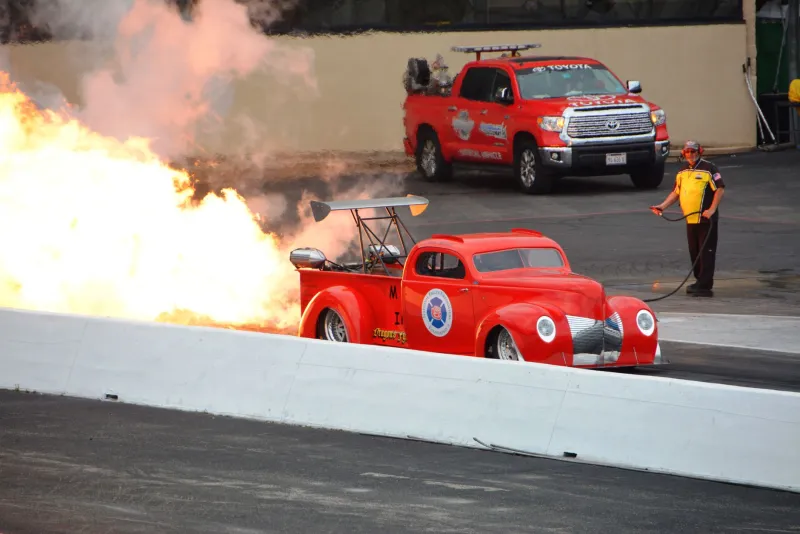
Strip prep in the modern era is a different animal than it was fifty years ago. Today's VHT applications and track preparation technology give front-engine dragsters a level of bite at the launch that builders from the early days would have found almost unbelievable. That matters enormously when you're trying to replicate a chassis setup from an era when tracks were rougher, stickier in unpredictable ways, and far less consistent from one end to the other.
A rear suspension geometry that worked brilliantly on a half-prepped track in 1968 may actually fight you on a modern, well-groomed surface. The car that squatted and hooked on a loose track might want to push or wheel stand in a way that a direct replica chassis just isn't set up to manage. Builders who've gone through this process the hard way will tell you the same thing: you end up chasing a handling problem that was actually built into the car before you ever fired it up.
What Actually Carries Over
None of this means the old builds have nothing to teach you. Far from it. The fundamentals of weight distribution, the physics of weight transfer under hard acceleration, the relationship between blower drive ratio and cylinder pressure — these principles are as valid today as they were when your hero was making his first passes at Lions Drag Strip.
The geometry of a well-designed front-engine dragster chassis is largely timeless. The logic behind a properly sized header for a given displacement and RPM range doesn't expire. Understanding how clutch engagement timing affects 60-foot numbers is knowledge that transfers directly from any era to your current build.
The trick is learning to separate the why from the what. Why did that builder run that much rear wing? Because of how the car wanted to come off the centerline at a certain speed on that track with that tire. What does your car need? Maybe something different entirely, but you arrive at the answer using the same reasoning process.
Talking to the Survivors
One resource that's genuinely underused in the front-engine dragster community is the people who were actually there. A surprising number of crew chiefs, builders, and drivers from the sport's formative decades are still around, still engaged, and often more than willing to talk to someone who approaches them with genuine respect and smart questions.
These conversations will almost always reveal something the magazines never captured. The part that got swapped out three races before the record run. The tire pressure that nobody talked about. The clutch adjustment that the chief made on a gut feeling and never documented. This is the living institutional knowledge of the sport, and it won't be available forever.
Seek it out. Ask better questions than "what parts did you run?" Ask why decisions got made. Ask what didn't work. Ask what the team tried and threw away. That's where the real education lives.
Build With Intention, Not Imitation
At the end of the day, the builders who get the most out of studying historic setups are the ones who treat those builds as research, not as instruction manuals. They absorb the engineering philosophy, they understand the problem-solving context, and then they apply those lessons to a build that's designed for where they're actually racing, with the parts that are actually available, on the fuel that's actually in the drum.
Your hero's car was great because it was the right solution for a specific moment in time. Your job isn't to recreate that moment. Your job is to find the right solution for right now — and if you've done your homework on what made those old builds work, you're already better equipped to do exactly that.