Last Year's Trophy Is This Year's Anchor: How Winning Seasons Quietly Set Front-Engine Dragster Teams Up to Fail
Everybody talks about what it takes to win. Nobody talks about what winning does to you.
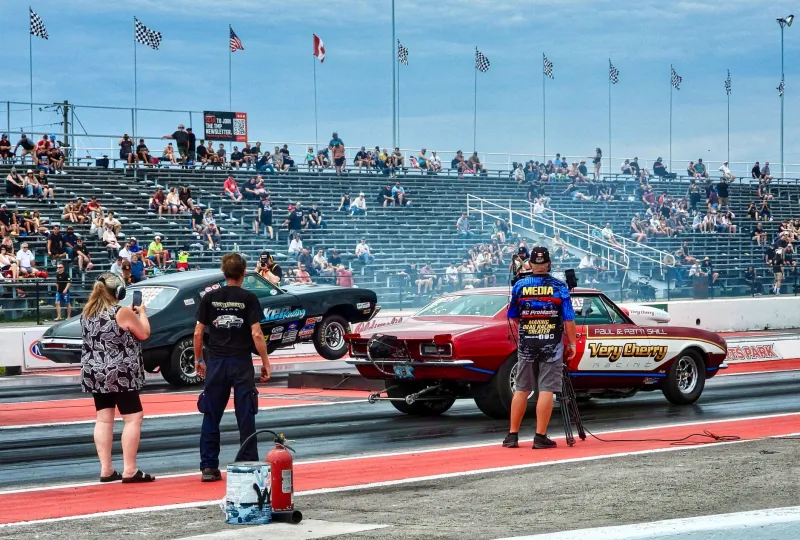
Ask around the pits at any serious front-engine dragster event and you'll find them—the teams that cleaned up last season, rolled in this year with the same car, the same tune, the same crew, and somehow can't find the front half of the pack. They're not rookies. They're not underfunded. They just can't figure out why the setup that made them untouchable twelve months ago is now turning them into also-rans.
This is the Comeback King's Curse. And it's more common than anyone in the sport likes to admit.
The False Gospel of Proven Data
Here's where it usually starts: a dominant season produces a mountain of logbook data, dyno sheets, and track notes that feel like scripture. Every time number, every weather correction, every tire pressure call—it all points to a formula that worked. So why mess with it?
Because the track didn't get the memo. Because the competition did.
When a front-engine dragster team runs away with a points championship, they're not operating in a vacuum. Every rival crew is watching. They're studying your launch, clocking your sixty-foot numbers, and spending the off-season figuring out exactly where you found your edge. By the time spring test-and-tune rolls around, those teams have already closed a chunk of the gap—and some of them have leapfrogged you entirely.
The winning team, meanwhile, walked into the off-season with every reason not to change anything. And that's the trap.
Mechanical Complacency Looks a Lot Like Confidence
There's a version of this that plays out in the shop, not just in the driver's head. After a strong season, parts that are technically still within spec get waved through inspections they would've failed in leaner years. The clutch pack that's "probably good for another season." The rear suspension geometry that was dialed in two years ago and hasn't been revisited since. The fuel system that's been running rich on hot days but hasn't caused a problem yet.
Winning teams develop a tolerance for marginal. When everything's working, it's hard to justify tearing into systems that aren't obviously broken. But front-engine dragsters are unforgiving machines. They don't reward tolerance. They punish it—usually at the worst possible moment, in front of the largest possible crowd.
The teams that stay at the top aren't the ones who trust last year's setup. They're the ones who treat a championship as a reason to rebuild from scratch, not a reason to leave well enough alone.
The Psychological Weight of a Number to Defend
Shift the conversation from the shop to the cockpit and the problem gets even messier.
Drivers who've had a dominant season carry something into the following year that's hard to quantify but very easy to feel: expectation. Not from the crew chief or the sponsors—from themselves. There's a mental baseline that gets established after a run of wins, and anything short of that baseline starts to feel like failure. That pressure changes decision-making at the tree in ways that are subtle but devastating.
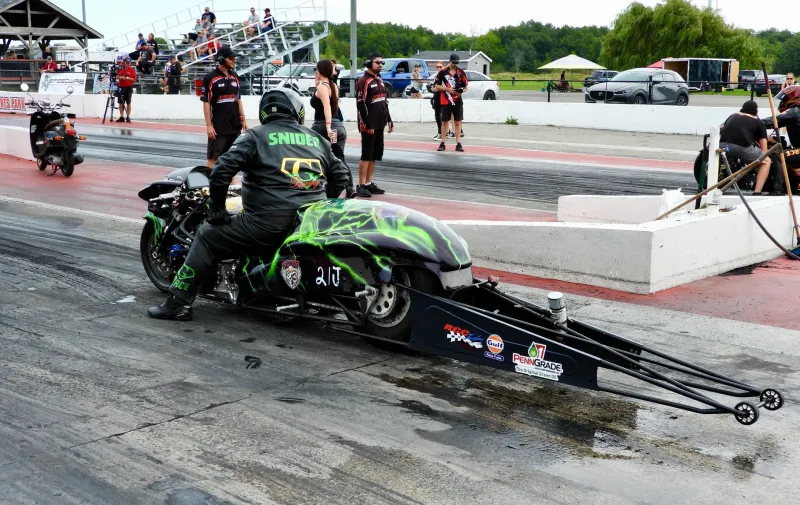
The driver who was relaxed and reactive last year—trusting instinct, staying loose, just racing—now has something to protect. And protection mode in a front-engine dragster is almost always slower than attack mode. You start second-guessing your reaction time. You lift when you should stay in it. You play it safe on a track condition that last year you would've exploited without a second thought.
Championship-caliber drivers aren't immune to this. If anything, they're more susceptible, because they have more to lose in their own minds.
The Competition Doesn't Slow Down for Your Legacy
This point can't be made loudly enough: the drag racing landscape is not static. Classes evolve. Rules packages shift. New combinations emerge from builders who spent the winter grinding while you were celebrating. The front-engine dragster community specifically has seen a genuine resurgence in recent years, which means more talent, more fresh builds, and more hungry teams who have nothing to protect and everything to prove.
A team running last year's winning combination against this year's field isn't running a proven setup. They're running an outdated one.
The teams that consistently repeat at the top—the ones who seem to win every other year rather than just every year—are almost always the ones who treat a championship as a launching pad rather than a destination. They ask harder questions in the off-season. They challenge assumptions that worked. They look for the next tenth before the competition finds it for them.
Breaking the Cycle Before It Breaks Your Season
So what does a winning team actually do to avoid this trap? A few things tend to separate the repeat champions from the one-hit wonders.
Treat the off-season like a loss. Sounds counterintuitive, but teams that won big and then rebuilt their approach from first principles tend to show up the following year sharper than teams that coasted on momentum. Strip the car down. Revisit every system. Ask why it worked, not just that it worked.
Schedule a devil's advocate session. Bring in a crew member, a trusted competitor, or even a fresh set of eyes from outside your racing circle. Give them explicit permission to challenge your setup decisions. The goal isn't to change everything—it's to make sure you're keeping things because they're actually the best choice, not because they're familiar.
Separate the driver from the data. Last year's tune was optimized for last year's driver in last year's conditions. If your reaction times have drifted, if your launch feel has changed, if you've put on weight or changed your pre-race routine, the tune needs to reflect that. Don't assume the data still fits.
Watch the fast guys, not the familiar ones. After a dominant season, it's tempting to pay attention only to the teams you know. But the threat usually comes from somewhere unexpected. Keep your eyes on the whole field, especially the teams who finished just outside the money and looked hungry doing it.
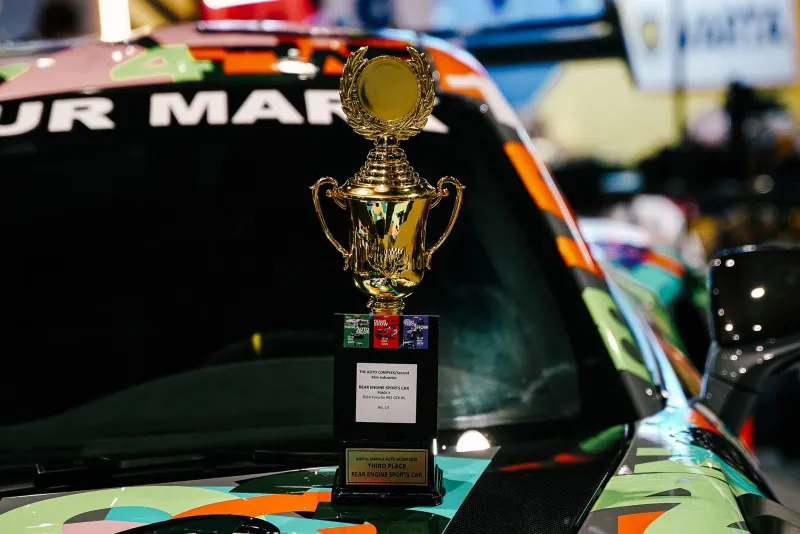
The Trophy Doesn't Run the Quarter Mile
At the end of the day, the Comeback King's Curse is really just the natural consequence of letting past success define present strategy. The front-engine dragster is a machine that demands constant evolution—in the tune, in the chassis, in the driver's mental approach. What worked last season is a data point, not a blueprint.
The teams that understand this show up every year ready to earn it again. The teams that don't spend most of the season wondering what happened to their magic.
The trophy sits on the shelf. The work starts over Monday morning.