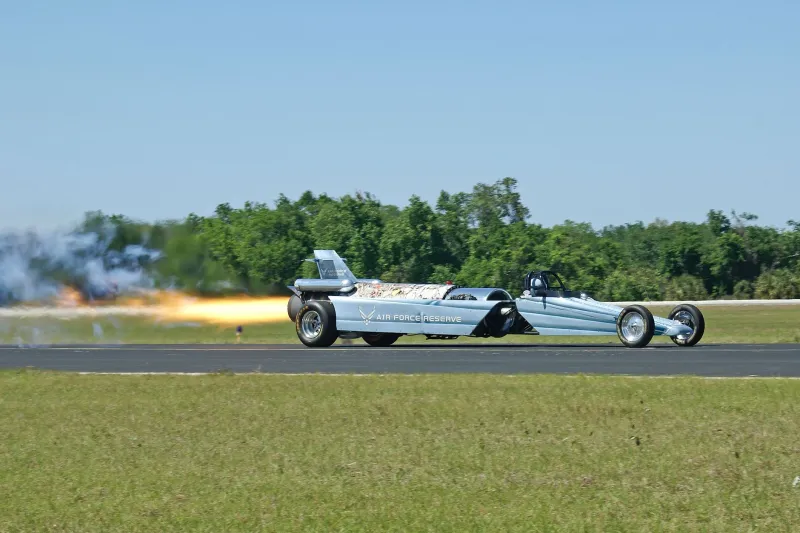
Your Best Pass Might Be Your Biggest Problem: The Bracket Racing Truth No One Tells You
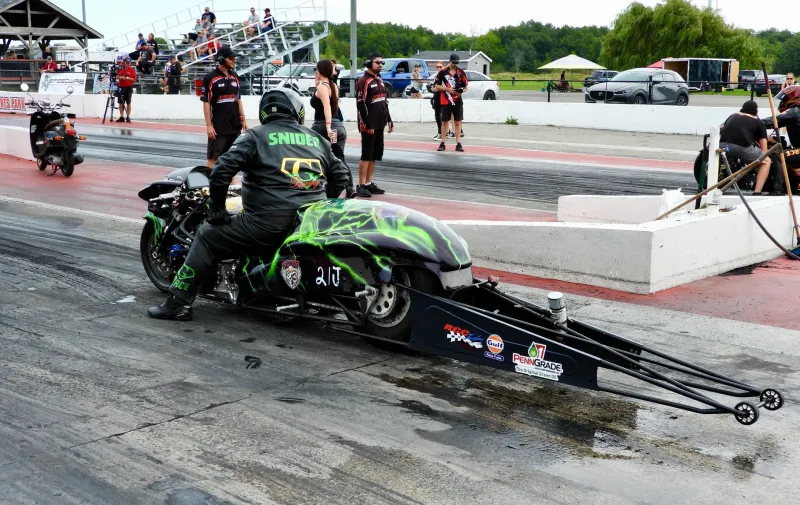
There's a moment every bracket racer knows. You stage the car, leave clean, and the timeslip comes back so close to your dial-in it's almost spooky. Your crew chief grins. Your buddies slap the roof. Everything feels right.
Then tournament weekend arrives, and suddenly that perfect test pass feels less like an asset and more like a leash around your neck.
This is the dial-in dilemma — and if you're running a front-engine dragster in any kind of serious bracket competition, it's a problem you're going to face sooner or later. Probably sooner.
When Consistency Becomes a Liability
Front-engine dragsters are built for predictability. That's the whole game at the bracket level. You tune for a number, you chase that number on the practice tree, and you show up on race day expecting the car to do exactly what it did all week. And a lot of times, it does.
But here's the thing nobody really talks about: the more consistent your car is, the more information you're handing over to every opponent who's watching. Timeslips are public at most events. People talk. Crew chiefs compare notes. When your dragster runs a 6.42 in testing and you dial a 6.42 on race day, you've essentially told the entire field what to expect out of you.
A car that's all over the place — running a 6.38 one pass, a 6.47 the next — is actually harder to race against in a bracket format. Nobody knows what to dial. Nobody knows whether to pedal or hold the throttle. The unpredictability creates hesitation in your opponent, and hesitation loses races.
Your consistency? It removes that hesitation entirely.
The Psychological Weight of Knowing
There's another layer to this that doesn't get discussed enough, and it's the mental side of the equation.
When you've got a car that you know can run a specific number — and you've proven it multiple times in testing — you start carrying that knowledge into the water box with you. That's not always a good thing. You stop reacting and start calculating. You start worrying about whether the air is the same as it was Tuesday. You second-guess whether the track has tightened up or gone slick since your morning time trial.
Faster, less predictable cars don't carry that weight. Their drivers are used to adapting on the fly. They've never had the luxury of a perfect baseline, so they've built the mental muscle to read conditions in real time and adjust. Meanwhile, you're standing at the line trying to protect a number.
Protecting a number is a losing mindset in bracket racing. You should be racing the opponent, not the timeslip.
Reading the Room — and the Other Lane
So what do you actually do with this information? You start paying attention to the other side of the track.
Smart bracket racers — the ones who consistently go deep into eliminations — spend as much time studying their opponents as they do tuning their own cars. If you know the guy in the other lane has a consistent car with a tight dial, you can race him differently than you'd race someone who's been scattershot all day.
Against a consistent driver, you have to be willing to take the tree. You can't spot him a reaction time advantage and expect to catch him at the finish line by running a better number. His car is going to do what it does, and your only real variable is the starting line.
Against an inconsistent driver, you've got more options. You can afford to be a little conservative on the launch and use your car's predictability as the weapon it actually is. Let him beat himself.
The point is, the dial-in dilemma isn't just about your own car. It's about how your car's strengths and weaknesses interact with whoever's in the other lane on a given run.
Managing Your Dial-In Without Gaming the System
There's a difference between smart dial-in management and sandbagging, and it's worth being clear about that distinction.
Sandbagging — deliberately running slower than your car is capable of in testing to set an artificially high dial-in — is bad for the sport and generally transparent to anyone who's been around long enough. Don't do it.
But smart dial-in management? That's just racing. If conditions on race day are noticeably different from your test sessions, you're not obligated to run your test-session number. Dial what the car is going to run today, in these conditions. That's the honest version of the game, and it still requires real skill.
The other piece of this is understanding your car's range. Most front-engine dragsters don't run one number — they run a window. Maybe your car is a 6.40-to-6.44 car depending on conditions. Knowing that window, and understanding which end of it you're likely to hit based on current track and weather, is legitimately useful information. Dial to the center of your expected range given the day's variables, and you've done your homework.
Building a Reputation That Works For You
Here's a long-game thought that doesn't come up enough in bracket racing circles: your reputation is a strategic tool.
If you're known as a guy who dials tight and runs his number, opponents will race you differently. Some will get conservative. Some will try to outreact you at the tree because they assume you'll be there at the other end. You can use that expectation against them.
The front-engine dragster community is tight-knit. People remember who's consistent and who isn't. They remember who dials honest and who games the system. Building a reputation for running clean, predictable passes actually creates psychological pressure on opponents who know they can't count on you making a mistake.
That pressure is worth something. Use it.
The Bottom Line on Knowing Too Much
Bracket racing at the tournament level is chess with fire and tire smoke. Your test passes give you information — but they give everyone else information too. The racers who win consistently aren't necessarily the ones with the most consistent cars. They're the ones who know how to use consistency as a weapon without letting it become a cage.
Your front-engine dragster runs what it runs. The job is to make sure that number is working for you at the line, not against you.
Build it upfront. Run it hard. And when it's time to dial in on race day, make sure you're dialing for the conditions — not for the timeslip you left on the trailer.