Five Build Blunders That'll Drain Your Wallet Before Your Front-Engine Dragster Ever Sees a Christmas Tree
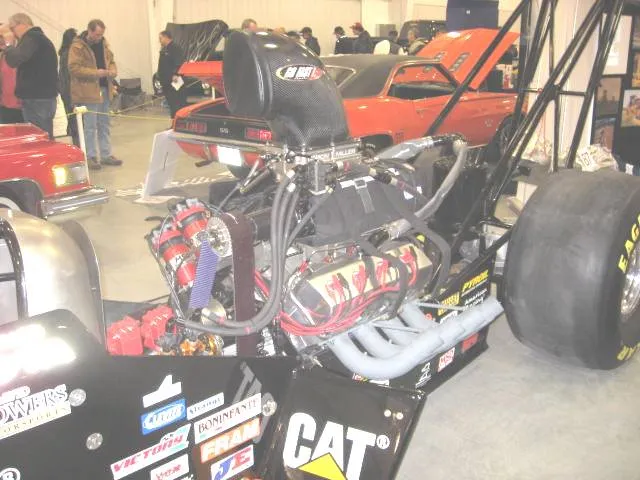
Photo: Trekphiler, CC BY-SA 3.0, via Wikimedia Commons
Every front-engine dragster you've ever admired at the track started with a builder who had more enthusiasm than experience. That's not a knock — it's just the truth. The learning curve is real, and in this sport, the tuition tends to get collected in the form of bent parts, wasted labor hours, and credit card statements that make your stomach hurt.
The good news? The mistakes are predictable. Talk to enough veteran builders and crew chiefs, and the same five blunders come up again and again. Here's a straight-talk breakdown of what they are, what they cost, and how to keep them from wrecking your build before it ever makes a pass.
Mistake #1: Getting the Weight Distribution Wrong From the Jump
Front-engine dragsters are inherently nose-heavy by design — that's part of what makes them such a unique challenge. But there's a difference between the intentional weight bias that defines the class and an accidental, unmanaged imbalance that kills your launch.
A lot of first-time builders get so focused on engine placement and cockpit ergonomics that they never actually corner-weight the car before it's fully assembled. Then they wonder why the rear tires won't hook no matter how much they fiddle with shock settings.
What it costs you: Ballast retrofits, suspension rework, and potentially a full chassis re-jig can run anywhere from $800 to upward of $4,000 depending on how far down the wrong path you've already gone. Corner-weighting equipment rental or a session at a qualified shop is $100–$300. Do the math.
The fix: Plan your weight distribution on paper before you start bolting things together. Use a chassis design that accounts for your specific engine and driver weight combination. Corner-weight the car at every major stage of the build, not just at the end. Adjustability built into the chassis from the start is worth every penny.
Mistake #2: Mismatching Engine Output to Chassis Rating
This one happens constantly, and it's almost always the result of optimism outpacing engineering. A builder sources a used chassis — maybe it came off a car that ran in a milder class — and then drops in an engine that produces significantly more power than the frame was designed to handle. The result is a car that's fundamentally unsafe and structurally compromised under race loads.
Chassises have ratings for a reason. Those numbers reflect the stress loads the structure can absorb during a hard launch, a high-speed run, and especially a parachute deployment at the far end. Exceed those limits and you're not just risking DNFs — you're risking a catastrophic failure at speed.
What it costs you: At minimum, a full chassis certification re-inspection and likely a mandatory rebuild. In worst-case scenarios, you're looking at a total loss of the chassis and potential safety equipment replacement. We've heard of builders dropping $6,000–$12,000 redoing work that could have been avoided with a $200 conversation with a certified chassis builder upfront.
The fix: Before you buy a used chassis, get the documented ratings and cross-reference them against your engine build specs — not your projected specs, your actual specs. When in doubt, call a certified chassis shop and describe the combination. They've seen it all and can save you from an expensive mistake in about fifteen minutes.
Mistake #3: Skipping the Driveline Geometry Homework
Driveline angles might be the least glamorous topic in drag racing, but they're responsible for a surprising number of expensive failures on rookie builds. Universal joints running at improper angles create vibration harmonics that destroy U-joints, damage transmission output shafts, and can cause driveshaft failures — which, at speed, are genuinely terrifying events.
First-time builders often set their driveline angles based on what looks right rather than what measures right. The car sits on a lift, the driveshaft looks straight enough, and the builder moves on. Then the car makes three passes and a U-joint grenades.
What it costs you: A U-joint failure at speed can take out the transmission tailshaft, the rear differential, and potentially damage the chassis itself. Repair bills in the $1,500–$5,000 range are not uncommon. A driveline angle measurement tool costs under $50 and takes twenty minutes to use properly.
The fix: Measure your driveline angles with the car at ride height and loaded. Most manufacturers publish acceptable operating angle ranges for their components — stay inside them. If your setup requires a compromise, split the angle difference between the front and rear U-joints rather than loading one end.
Mistake #4: Underspeccing the Safety Equipment to Save Money
Look, everyone's working with a budget. But the one place where cutting corners has consequences that go beyond money is safety equipment. Rookie builders sometimes install harnesses, roll cages, or fire suppression systems that don't meet current sanctioning body requirements — either because they bought used gear without verifying the certification date, or because they went with the cheapest option available.
Beyond the obvious safety implications, underspecced safety equipment will get your car black-flagged at tech inspection, meaning you don't race until it's corrected. And correcting it at the track, under time pressure, is always more expensive than doing it right at home.
What it costs you: Emergency equipment replacement at or near the track can cost 30–50% more than purchasing the same gear through normal channels. We've heard of racers spending $2,000+ on last-minute fixes that would have cost $1,200 with proper planning.
The fix: Download the current rulebook for every sanctioning body you plan to run under before you purchase a single piece of safety equipment. Verify certification dates on anything used. When in doubt, buy new and buy to the highest standard you can afford — it's the one area where over-speccing is never a mistake.
Mistake #5: Neglecting the Electrical System Until the Very End
The electrical system is almost always the last thing rookie builders think about and the first thing that causes problems at the track. Wiring that's undersized for the load, ground paths that weren't properly planned, or ignition systems cobbled together from mismatched components create gremlins that are brutally difficult to diagnose under race-day pressure.
Front-engine dragsters often run high-demand electrical systems — MSD ignitions, data loggers, shift lights, line locks, and more — and routing all of that through a wiring harness that wasn't designed for the load creates heat, voltage drop, and intermittent failures at the worst possible moments.
What it costs you: Electrical diagnosis at a shop can run $100–$150 per hour, and chasing a wiring gremlin is notoriously time-consuming. Add in component replacement and you're easily looking at $500–$2,000 in avoidable costs. More importantly, you're losing track time.
The fix: Plan your electrical system early, not late. Use a wiring diagram from the start. Size your wire gauge to the load, not to what fits neatly through a grommet. Run dedicated grounds to a central point rather than chasing individual ground locations. If wiring isn't your strong suit, pay a professional to do it once and do it right — it's genuinely worth it.
The Bottom Line
Building a front-engine dragster is one of the most rewarding projects in motorsport. But it rewards preparation more than it rewards enthusiasm. The builders who show up on opening weekend with a car that's dialed in, safe, and competitive are almost always the ones who did their homework before they ever picked up a wrench.
Learn from the mistakes that have already been made. The veterans in this community are generous with their knowledge — ask questions, read the forums, and don't let pride keep you from admitting what you don't know yet. Built upfront means built smart. Everything else follows.