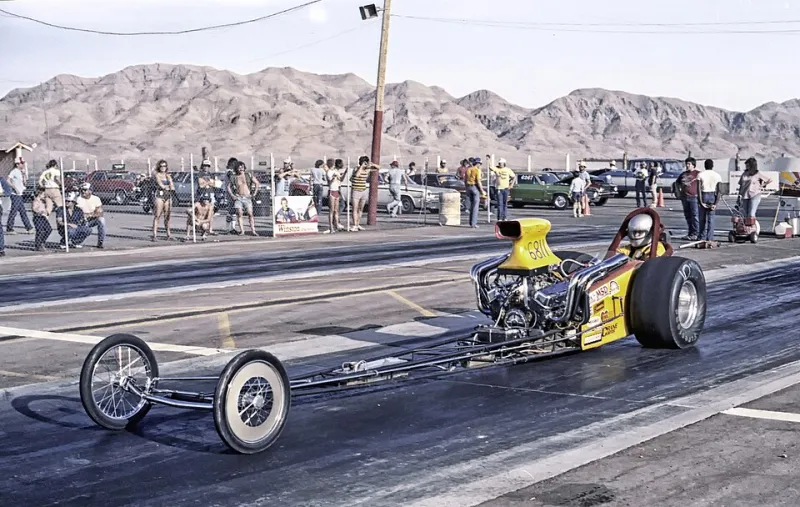
Running Dry: How Nitromethane's Vanishing Act Is Forcing Front-Engine Dragster Teams to Rethink Everything
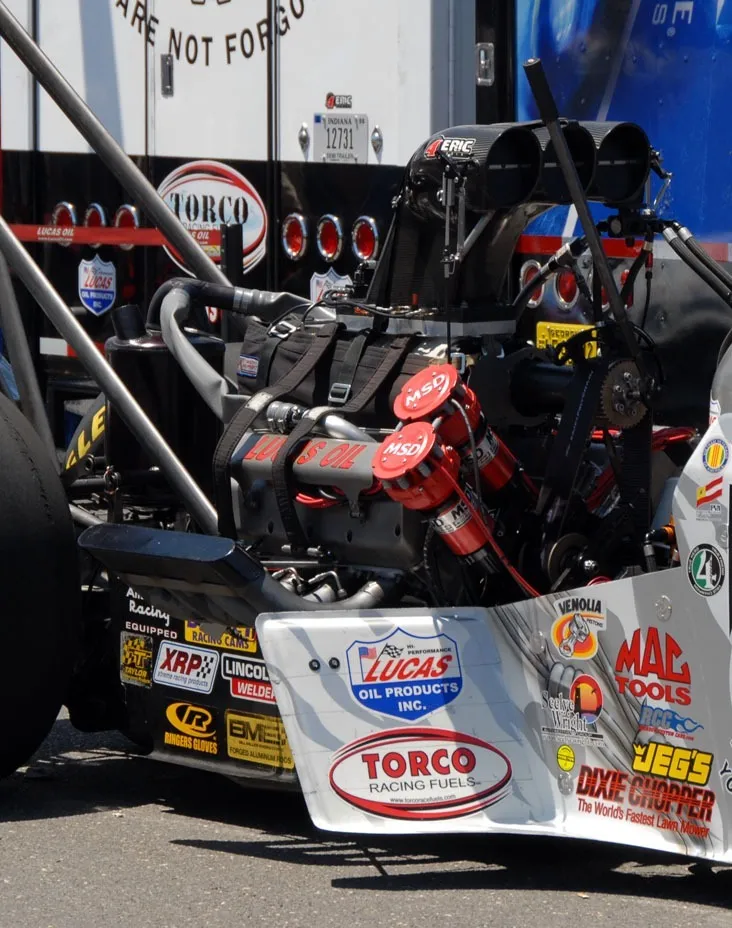
Photo: nitromethane fuel drums drag racing pit area, via anita-fred.net
For most front-engine dragster racers, nitromethane isn't just a fuel choice — it's a way of life. That sharp, sweet bite in the air when a nitro motor fires, the raw, chest-thumping authority of a properly tuned top fuel plant leaving the line — it's why a lot of us got into this sport in the first place. But in 2024, that way of life is getting expensive, complicated, and in some corners of the country, genuinely hard to maintain.
The nitromethane supply chain is in rough shape. That's not a rumor circulating in the pits — it's something teams from California to the Carolinas are dealing with right now, whether they're running a nostalgia fuel car or chasing a national event. The question isn't just where to find the stuff anymore. It's how to build and race smart when the rules of the game keep shifting underneath you.
Where Did All the Nitro Go?
Nitromethane is a specialty chemical. It's not refined in massive quantities like gasoline or even ethanol, and its production is tied to industrial chemical manufacturing processes that have nothing to do with drag racing. When global supply chains took a beating in the early 2020s, nitro got caught in the crossfire along with everything else. Production slowdowns, shipping bottlenecks, and raw material shortages hammered the market.
What's different now, heading deeper into 2024, is that prices haven't recovered the way a lot of people expected them to. Some suppliers have reported inconsistent availability, and the cost-per-gallon for competition-grade nitromethane has climbed significantly compared to just a few years ago. For a team that's running a fuel dragster on a regional circuit and burning through 15 to 20 gallons per event weekend, that adds up fast.
Add in the fact that a handful of smaller distributors have quietly exited the market, and you've got a situation where racers who used to have three or four reliable local options now might have one — if they're lucky.
Sanctioning Bodies Are Watching, Too
It's not just the supply side creating headaches. Several sanctioning bodies have been revisiting their fuel regulations in response to both safety concerns and the reality that not every competitor has equal access to consistent nitromethane supplies. The conversations happening in boardrooms and rulebooks right now could have real consequences for how front-engine classes are structured going forward.
Some organizations are exploring tighter percentage caps on nitro content, which sounds restrictive on the surface but could actually level the playing field for teams that can't always source the same quality product at the same percentage. Others are looking at clearer language around fuel blending tolerances, which has historically been a gray area that creative tuners have exploited — sometimes legally, sometimes not.
The broader concern from competitors is that well-intentioned rule changes made in response to supply problems could permanently alter the character of nitro classes, even after the supply situation stabilizes. That's a legitimate worry, and it's one the community should be pushing sanctioning bodies to address transparently.
What Teams Are Actually Doing About It
Here's where it gets interesting. Racers are nothing if not resourceful, and the response to the nitro crunch has been creative in ways that are genuinely worth paying attention to.
Buying in bulk and buying early. The teams with the budget and storage capacity are pre-purchasing nitromethane well ahead of their race season, locking in pricing before it climbs and ensuring they're not scrambling for supply in the weeks before a major event. It requires capital and proper storage infrastructure, but for serious competitors, it's becoming standard practice rather than a luxury.
Tightening up fuel consumption through tuning. Some engine builders are taking a harder look at their tune-ups with an eye toward efficiency rather than just maximum output. The mentality of throwing more nitro at a problem is getting rethought when nitro costs more and supplies less reliably. Leaner, smarter tune-ups that extract more from each gallon are suddenly a competitive advantage beyond just the obvious cost savings.
Exploring alternative fuel blending. This is the most complicated territory, and it deserves some honest acknowledgment: blending alternatives to stretch or partially substitute nitromethane is not straightforward, and doing it wrong can be genuinely dangerous. That said, experienced engine builders and fuel chemists are actively researching how methanol blending ratios and other additives can be optimized within sanctioning body rules to reduce nitro dependency without sacrificing competitive performance. This isn't something a weekend racer should experiment with casually — but at the professional and semi-professional level, it's a real conversation.
Adjusting race schedules strategically. Several regional teams have gotten more selective about which events they attend, concentrating their fuel budget on high-value races rather than running every weekend show. It's a painful adjustment for people who live to race, but it's also forcing a more disciplined approach to event selection that some crews admit has actually improved their focus and preparation.
The Small Teams Feel It Most
Let's be direct about something: the nitro shortage doesn't hit everyone equally. The big-budget operations with national sponsors and established supplier relationships are insulated in ways that grassroots front-engine dragster teams simply aren't. When prices spike and availability tightens, it's the guy running a fuel altered on a shoestring budget out of a single-car trailer who gets squeezed the hardest.
That's a problem for the long-term health of the sport. Nitro drag racing's culture has always drawn energy from the passionate, scrappy competitor who mortgages the weekend to make the show. If fuel costs and availability become genuine barriers to entry — not just inconveniences but actual gatekeepers — the sport loses something that can't easily be replaced.
Community-level solutions matter here. Track operators who can facilitate group buys for their regular competitors, regional clubs that share supplier contacts and negotiate collectively, and sanctioning bodies that account for fuel access realities when writing rules — these aren't glamorous fixes, but they're the kind of structural support that keeps the grassroots end of the sport alive.
Where This Is All Heading
The honest answer is that nobody knows exactly how the nitromethane supply situation resolves over the next year or two. Industrial chemical markets are unpredictable, geopolitical factors affect raw material availability in ways that are hard to forecast, and the drag racing community is a small enough customer base that it has limited leverage over broader market forces.
What's clear is that the teams and organizations adapting right now — buying smart, tuning efficiently, scheduling strategically, and pushing sanctioning bodies for sensible rule frameworks — are the ones who'll be best positioned regardless of how the supply picture evolves.
Front-engine dragster racing was built on ingenuity. The guys who figured out how to make these cars faster, safer, and more competitive over decades didn't do it by waiting for conditions to get easier. They did it by solving hard problems with the resources they had.
This is just the next hard problem. And if the history of this sport tells us anything, somebody's already in a garage somewhere figuring out the answer.